
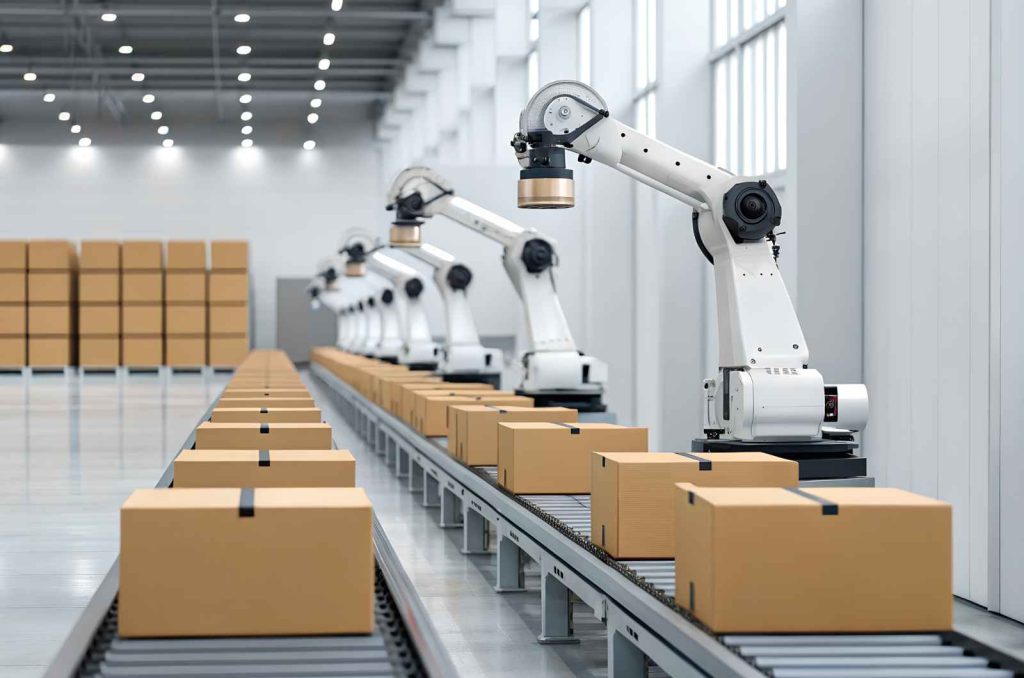
The industrial automation landscape stands at a transformative inflection point, where traditional robotics evolves into intelligent, adaptive systems that redefine manufacturing possibilities. Intelligent robotics represents far more than incremental improvement—it signifies a fundamental reimagining of how machines perceive, learn, and collaborate within production environments. As artificial intelligence, advanced sensors, and machine learning converge with robotic hardware, a new era of physical AI is emerging that enables robots to understand context, adapt to dynamic conditions, and make autonomous decisions in real-time. This technological revolution addresses critical manufacturing challenges including persistent labor shortages, demands for unprecedented flexibility, and the imperative for sustainable operations. For nearly three decades, Assatec Robotics has positioned itself at the vanguard of this transformation, integrating cutting-edge FANUC intelligent robotic systems with complementary technologies to deliver automation solutions that don't merely follow programmed instructions but actively respond to production realities, continuously optimize performance, and evolve alongside business needs.
?What Makes Robotics Intelligent in Modern Manufacturing
The distinction between conventional automation and intelligent robotics lies fundamentally in cognitive capability—the capacity for perception, reasoning, and adaptive action. Traditional industrial robots excel at repetitive tasks in structured environments, executing predetermined sequences with remarkable precision but limited flexibility.
The Three Stages of Intelligent Robotics Evolution
Intelligent robotics transcends these constraints through three evolutionary stages. Rule-based systems represent the foundation, where robots follow sophisticated programmed logic to handle variations within defined parameters. Training-based robotics introduces machine learning, enabling systems to learn from simulated or real-world experiences and adapt to tasks involving significant variation without exhaustive programming. Context-based robotics marks the frontier, where advanced AI empowers robots to perceive their environment through multiple sensors, interpret unfamiliar situations, and autonomously determine appropriate responses.
Core Technologies Enabling Robot Intelligence
These systems leverage computer vision to identify objects regardless of orientation, force sensing to adjust grip strength dynamically, and predictive algorithms to anticipate process variations before they occur. The integration creates manufacturing systems that think, learn, and improve continuously—robots that don't simply execute tasks but understand them, adapting strategies based on outcomes and environmental feedback.
Practical Applications of Intelligent Systems
This intelligence manifests in practical applications: robotic arms that automatically adjust welding parameters based on material variations, assembly systems that recognize defective components before installation, and material handling robots that optimize their paths in real-time to avoid congestion and minimize cycle times.
How Do AI and Machine Learning Transform Robotic Capabilities?
Artificial intelligence integration fundamentally expands what industrial robots can accomplish, transforming them from programmable tools into cognitive partners in the manufacturing process. Machine learning algorithms enable robots to continuously improve performance by analyzing operational data and identifying patterns humans might overlook.
Vision Systems and Quality Control
Computer vision systems powered by deep learning can now identify defects with accuracy exceeding 98%, detecting subtle variations in color, texture, and geometry that indicate quality issues. Predictive maintenance algorithms analyze vibration patterns, temperature fluctuations, and power consumption to forecast equipment failures days or weeks in advance, preventing costly unplanned downtime.
Optimization and Learning Capabilities
Path planning optimization uses AI to calculate the most efficient robot movements, reducing cycle times while minimizing wear on mechanical components. Natural language processing enables intuitive robot programming, allowing operators to describe tasks verbally rather than writing complex code. Reinforcement learning permits robots to experiment with different approaches to challenging tasks, gradually discovering optimal techniques through trial and feedback.
Adaptive Response to Variations
The cumulative effect transforms robots from static automation into dynamic problem-solvers. When a robot encounters unexpected variations—a part positioned differently than anticipated, material properties that differ from specifications, or environmental conditions affecting process parameters—AI-enabled systems analyze the situation, draw upon learned experiences, and adapt their approach autonomously. This capability proves particularly valuable in high-mix manufacturing environments where product variety previously made automation impractical. Assatec leverages these AI capabilities within FANUC's advanced control systems, implementing intelligent robotics that deliver consistent results even as production requirements shift.
Why Are Collaborative Robots Redefining Human-Robot Interaction?
Collaborative robots, universally known as cobots, represent a paradigm shift in how humans and machines share industrial workspaces. Unlike traditional industrial robots that require safety caging and operate in isolation, cobots feature advanced safety systems enabling direct collaboration with human workers.
Advanced Safety Features
Force-limiting technology instantly detects unexpected contact and reduces applied force to safe levels, preventing injury if accidental collision occurs. Speed and separation monitoring uses sophisticated sensors to track human proximity, automatically slowing or stopping robot motion when workers approach. Hand-guiding capabilities allow operators to physically move robot arms through desired motions, teaching new tasks through demonstration rather than programming.
Operational Benefits of Collaborative Systems
These safety innovations unlock profound operational benefits. Cobots adapt easily to changing product requirements, making them ideal for small-batch production and frequent changeovers that characterize modern manufacturing. Their compact footprint and flexible deployment enable automation in space-constrained facilities where traditional robotic cells prove impractical.
Workforce Optimization and Productivity Gains
The collaborative nature optimizes workforce utilization—robots handle repetitive, physically demanding tasks while human workers focus on problem-solving, quality oversight, and process improvement activities that leverage human cognitive strengths. Research demonstrates cobots increase productivity by 30% while simultaneously improving workplace ergonomics and job satisfaction. FANUC's CRX and CR series collaborative robots exemplify these capabilities, offering payloads up to 50 kilograms with reach extending beyond 1,800 millimeters while maintaining intuitive programming interfaces that minimize training requirements. Assatec's expertise in cobot integration ensures these systems mesh seamlessly with existing workflows, creating hybrid manufacturing environments that harness both human adaptability and robotic consistency.
What Role Does Physical AI Play in Future Factories?
Physical AI represents the convergence of artificial intelligence with robotic hardware, creating systems capable of perceiving, reasoning about, and manipulating the physical world autonomously. This technology addresses a critical manufacturing challenge: the gap between digital intelligence and physical execution.
Enabling Technologies for Physical AI
Advanced sensor fusion combines data from cameras, LIDAR, force sensors, and tactile feedback to create comprehensive environmental awareness. Digital twin technology creates virtual representations of physical assets, allowing AI systems to simulate operations, test strategies, and predict outcomes before implementing changes in actual production. Edge computing processes sensor data locally in real-time, enabling split-second decisions without cloud connectivity delays.
Transformative Manufacturing Applications
These capabilities enable transformative applications across manufacturing operations. Autonomous mobile robots navigate dynamic factory floors, transporting materials between workstations while avoiding obstacles and adapting routes based on real-time congestion. Intelligent quality inspection systems examine products with superhuman precision, identifying microscopic defects invisible to human inspectors. Adaptive assembly systems automatically adjust techniques based on component variations, maintaining quality despite inconsistencies in supplied parts.
Strategic Manufacturing Advantages
Predictive process control monitors production parameters continuously, making micro-adjustments that optimize quality and efficiency. The World Economic Forum identifies physical AI as foundational to manufacturing's next evolution, enabling factories to respond dynamically to market changes, customize products economically at scale, and operate sustainably by minimizing waste and energy consumption. Assatec integrates physical AI capabilities into its robotic solutions, creating intelligent manufacturing systems that continuously adapt to operational realities.
How Does Assatec Lead Israel's Intelligent Robotics Revolution?
Since establishing operations in 1997, Assatec Robotics has accumulated unparalleled expertise in intelligent automation, building more robotic systems than any other integrator in Israel across virtually every manufacturing sector. This experience provides Assatec with unique insights into how intelligent robotics translates from technological potential into operational reality.
Strategic FANUC Partnership
The company's strategic focus on FANUC robotics reflects deliberate choice rather than convenience—FANUC's systems incorporate cutting-edge AI capabilities, advanced vision systems, and sophisticated control algorithms that enable the intelligent behaviors manufacturers increasingly require.
Comprehensive Integration Methodology
Assatec's integration methodology emphasizes holistic transformation rather than simple equipment installation. Projects begin with detailed operational analysis, identifying not just what to automate but how intelligent systems can fundamentally improve processes. System design incorporates AI capabilities appropriate to specific applications—vision-guided assembly where part variations exist, force-controlled operations where delicate handling matters, and predictive maintenance where equipment reliability proves critical.
Training, Support, and Technology Partnerships
Implementation includes comprehensive operator training that develops not merely operational competence but genuine understanding of how intelligent systems function and how to optimize their performance. Ongoing support extends beyond troubleshooting to include performance analysis and enhancement recommendations based on operational data. Assatec's partnerships with technology leaders including OnRobot for advanced end-effectors and A-feeders for sophisticated part presentation systems enable truly integrated solutions where every component contributes to overall system intelligence. This comprehensive approach ensures intelligent robotics delivers sustained value rather than becoming technological curiosities that underperform expectations.
What Industries Benefit Most from Intelligent Robotic Systems?
Intelligent robotics delivers transformative value across manufacturing sectors, with particularly dramatic impact in industries facing complexity, variability, or stringent quality requirements.
Automotive and Electronics Manufacturing
Automotive manufacturing leverages intelligent systems for adaptive welding that automatically adjusts parameters based on joint configuration, vision-guided assembly that accommodates part variations, and quality inspection that detects defects human inspectors might miss. Electronics production utilizes intelligent robots for microscopic component placement requiring sub-millimeter precision, flexible assembly that handles frequent product changes, and automated testing that adapts protocols to individual product configurations.
Food, Beverage, and Pharmaceutical Production
Food and beverage operations implement intelligent systems for handling delicate products without damage, adapting to natural variations in size and shape, and maintaining strict hygiene standards through automated cleaning and sanitization. Pharmaceutical manufacturing depends on intelligent robotics for precise dosing and filling operations, validated processes meeting regulatory requirements, and flexible production capabilities supporting multiple product lines.
Metal Fabrication and Consumer Goods
Metal fabrication employs intelligent systems for adaptive machining that compensates for material variations, automated welding with real-time quality monitoring, and complex finishing operations requiring tactile feedback. Consumer goods production benefits from intelligent robots handling high product variety, seasonal demand fluctuations, and customization requirements that traditional automation cannot economically address. The common thread across industries is complexity—situations where products vary, processes require adaptation, and rigid automation proves inadequate. Intelligent robotics thrives precisely where traditional automation struggles, making it increasingly relevant as manufacturing complexity grows and product lifecycles shorten. Assatec's cross-industry experience enables identification of solutions proven in one sector and adaptation to analogous challenges in others, accelerating implementation and reducing risk.
?When Should Manufacturers Implement Intelligent Robotics
The decision to implement intelligent robotics requires strategic evaluation of operational needs, technological readiness, and competitive dynamics. Several indicators suggest optimal timing for investment.
Key Implementation Triggers
Companies experiencing quality inconsistencies stemming from process variability benefit immediately from intelligent systems that adapt automatically to maintain specifications. Organizations facing skilled labor shortages find intelligent robotics provides capabilities that would otherwise require expert workers increasingly difficult to recruit and retain. Manufacturers pursuing mass customization strategies discover intelligent systems enable economic production of varied products that traditional automation cannot cost-effectively support.
Organizational Readiness Factors
However, successful implementation requires more than technological deployment. Organizational readiness matters critically—management must support cultural changes accompanying intelligent automation, technical staff require training to maintain and optimize sophisticated systems, and operators need preparation for evolved roles focusing on oversight rather than direct task execution.
Phased Implementation Strategy
Starting with targeted pilot projects in high-impact areas allows organizations to develop capabilities and demonstrate value before enterprise-wide deployment. This phased approach builds internal expertise, generates operational data validating benefits, and creates momentum for broader adoption. Financial considerations including available capital, expected ROI timeframes, and financing options influence timing, though intelligent robotics typically delivers returns within 12 to 24 months through productivity improvements, quality enhancements, and reduced operating costs. Assatec's consultative approach helps manufacturers navigate these considerations, identifying optimal entry points for intelligent automation and phasing implementation to align with organizational capabilities and business priorities.
?Where Is Industrial Robotics Technology Heading Next
The trajectory of intelligent robotics points toward increasingly autonomous, adaptive, and accessible systems that fundamentally reshape manufacturing paradigms. Several technological vectors define this evolution.
Emerging Robotics Technologies
Humanoid robotics, while currently emerging, promise unprecedented flexibility by enabling robots to work in environments designed for human workers without facility modifications. Generative AI integration will allow robots to create optimal strategies for unfamiliar tasks by synthesizing knowledge from vast training datasets rather than requiring task-specific programming. Swarm intelligence enables multiple robots to coordinate autonomously, collectively solving complex problems through distributed decision-making without centralized control.
Advanced Materials and Connectivity
Advanced materials including soft robotics that safely interact with delicate objects and self-healing components that extend operational lifespans will expand application possibilities. Quantum computing, as it matures, will enable real-time optimization of factory-wide operations simultaneously considering thousands of variables impossible for classical computers to process. Wireless 5G and eventual 6G connectivity will support unprecedented levels of robot coordination and cloud-based AI processing with latency measured in milliseconds.
Accessibility and Sustainability
Sustainable robotics incorporating recyclable materials, energy-efficient operation, and circular manufacturing principles will address environmental imperatives. Perhaps most significantly, robotics will become increasingly accessible to small and medium manufacturers through affordable systems, intuitive programming interfaces, and robot-as-a-service business models that eliminate capital barriers. These developments collectively point toward a manufacturing future where intelligent robotics is ubiquitous rather than exceptional, where factories continuously adapt to market dynamics, and where human workers collaborate seamlessly with intelligent machines that handle routine tasks while humans focus on innovation, problem-solving, and strategic decision-making. Assatec's commitment to technological leadership ensures clients benefit from these advances as they mature, continuously enhancing system capabilities and helping manufacturers maintain competitive advantage through state-of-the-art automation.
Embracing the Intelligent Automation Future with Assatec
The future of industrial automation is not merely automated—it is intelligent, adaptive, and collaborative. Intelligent robotics powered by artificial intelligence, machine learning, and advanced sensors represents the most significant manufacturing transformation since the introduction of programmable automation decades ago. This revolution addresses critical challenges including labor shortages, quality demands, operational flexibility, and sustainability imperatives that define modern manufacturing competition. Assatec Robotics, with nearly three decades of specialized expertise and unmatched implementation experience in Israel, stands uniquely positioned to guide manufacturers through this transformation. By integrating world-class FANUC intelligent robotic systems with complementary technologies and comprehensive support services, Assatec delivers not merely automated equipment but complete manufacturing transformation that generates measurable results while building foundations for continuous improvement. Whether facing immediate operational challenges or planning strategic capability development, manufacturers partnering with Assatec gain access to proven expertise, cutting-edge technology, and committed support that transforms automation investments into sustained competitive advantages. In a manufacturing landscape increasingly defined by intelligence, adaptability, and human-machine collaboration, the question is not whether to embrace intelligent robotics but how quickly organizations can implement solutions positioning them for long-term prosperity. Assatec provides the expertise, technology, and partnership required to navigate this transition successfully, delivering intelligent automation that doesn't just meet today's requirements but anticipates tomorrow's opportunities.
click here for more info: https://assatec.co.il/