
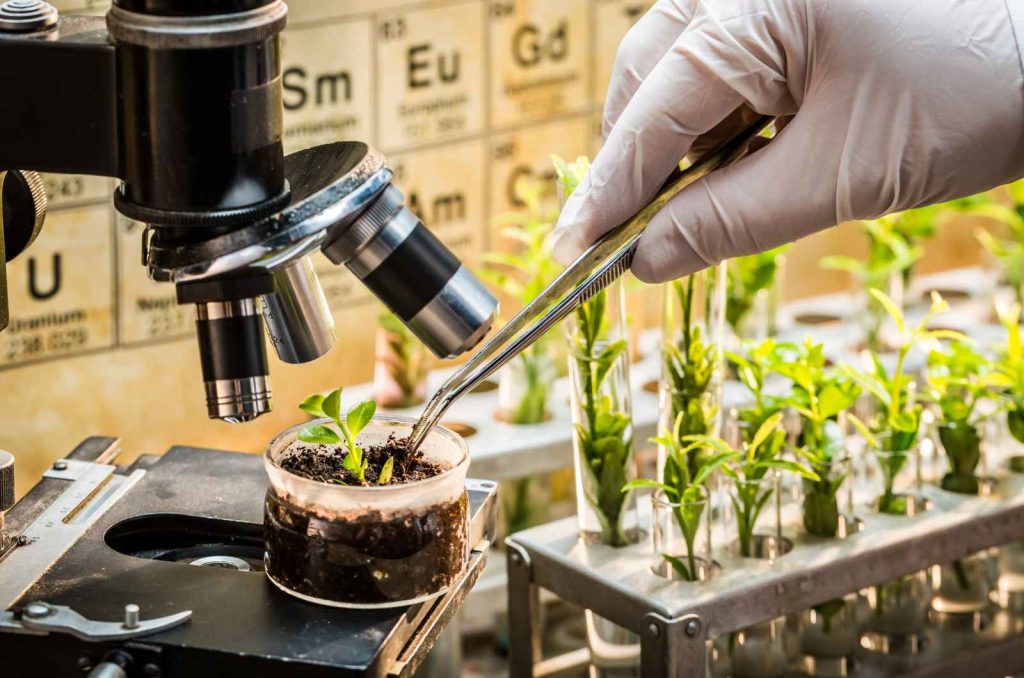
Artificial intelligence is fundamentally changing the speed, accuracy, and scale at which crop improvement programs operate. In 2025, AI tools are being used across every stage of the breeding pipeline from cross planning and genomic analysis to field data interpretation and variety selection compressing development timelines that once took a decade into a fraction of that time.
?What Problems Does AI Solve in Traditional Crop Breeding
Traditional breeding relies heavily on breeders' intuition and multi-year field evaluations to identify superior genotypes. This approach is constrained by the number of physical trials that can realistically be conducted each season and by the human cognitive limits in synthesizing thousands of data points simultaneously. Large breeding programs routinely generate millions of data observations across dozens of locations, crop types, and growing seasons a volume that analytical spreadsheets and conventional statistical methods cannot efficiently process.
AI addresses this by applying machine learning algorithms that detect subtle genotype-environment interaction patterns invisible to conventional analysis. Predictive models trained on historical breeding data can rank crossing combinations by their probability of producing elite offspring, allowing breeders to prioritize the most promising paths before committing field resources.
?How Large Is the AI Agriculture Market in 2025
According to Straits Research, the global AI in agriculture market was valued at approximately USD 1.18 billion in 2025 and is projected to reach USD 9.32 billion by 2033, growing at a compound annual growth rate of 20.2%. This rapid expansion reflects the increasing adoption of machine learning, computer vision, and predictive analytics tools across seed companies, agri-biotech firms, and research institutions worldwide.
The machine learning segment alone accounted for approximately 48% of total AI agriculture spending in 2025, underscoring its centrality to breeding data analysis, yield prediction, and variety selection workflows.
?What Does AI-Powered Genomic Analysis Look Like in Practice
Genomic selection, enabled by machine learning models, allows breeders to predict the performance of a plant based on its genetic markers without waiting for full-season field evaluation. This technique dramatically increases the number of genotypes that can be evaluated per breeding cycle, as predictions can be generated computationally from marker data long before plants are grown to maturity.
Algorithms such as GWAS (genome-wide association studies) and QTL (quantitative trait locus) mapping, when embedded within integrated breeding platforms, help identify which genetic regions are associated with target traits such as yield, disease resistance, and drought tolerance. According to Nature, advances in computational genomics are accelerating the translation of genetic discoveries into commercial breeding programs faster than at any previous point in agricultural history.
?How Are Breeding Software Platforms Incorporating AI Features
The most advanced breeding software platforms in 2025 integrate AI not as a standalone module but as an embedded decision layer across the entire breeding workflow. Crossing recommendation engines analyze pedigree, phenotypic performance, and genomic data simultaneously to suggest optimal cross combinations. Automated outlier detection flags unusual observations in field data before they contaminate downstream analyses. Predictive analytics dashboards surface environmental performance trends across multi-location trial networks.
Phenome Networks and AI-Driven Breeding
Phenome Networks https://phenome-networks.com/ is at the forefront of integrating AI into plant breeding workflows. Its PhenomeOne platform applies statistical methods and machine learning algorithms to translate plant observations into actionable breeding decisions. In 2025, the company announced the development of next-generation AI algorithms to power a new genomic module designed to deliver smarter insights and accelerate breeding decisions for seed companies and research organizations globally.
?What Are the Measurable Benefits of AI in Breeding Programs
Research consistently demonstrates that AI-assisted breeding programs achieve faster genetic gain per cycle compared to conventional approaches. Farms and research programs utilizing AI-powered precision technologies report yield improvements of 15–20% compared to conventional methods, along with significant reductions in resource inputs including water, fertilizers, and labor. For breeding programs specifically, the most impactful benefit is the compression of the time from cross to commercial release often cutting multiple years from a development timeline that traditionally spans a decade or more.
Artificial intelligence is no longer an experimental feature in crop improvement programs it is becoming a core operational capability. Organizations that embed AI into their breeding data management, genomic analysis, and decision-making workflows are gaining a measurable competitive advantage in variety development speed and selection accuracy, positioning themselves to meet the growing global demand for improved crop varieties.